

06 Sep Dog stress and recovery
Dogs tolerate stress differently depending on factors such as their genetics and personality, age and stage of development, intended purpose, health and previous experiences. Stress cannot be avoided completely and there is no reason to fear mild stress. Most dogs cope well even with intense stressful experiences if they occur infrequently and a small amount of stress can even support learning.
However, owners need to recognise when their dog is becoming overloaded, as excessive stress can have a huge number of negative effects on both the dog’s physical and mental health. A good basic principle for everyday life is that whenever a dog becomes aroused or stressed for any reason, care should be taken to bring their emotional state back down to normal in a way that suits that particular dog. Sometimes this may require only a short moment of standing still or sniffing the ground, while at other times considerably more may be needed.
Eustress
Dogs can also experience eustress or what is often called “good stress”. It occurs when a dog is enthusiastic and motivated, and the consequences of their behaviour are enjoyable and rewarding for them. However, when it continues for too long, eustress also turns into distress or “bad stress”. This is why it is important to monitor both the dog’s stress level and how long the stress continues in all situations.
A dog’s behaviour can even become compulsive as a result of eustress. Compulsive behaviour is always harmful, even when it is typical of a particular breed or activity. A good example is dogs that develop an addictive relationship with games involving repeatedly throwing objects. In other words, a dog should not remain in a state of eustress for long periods either.
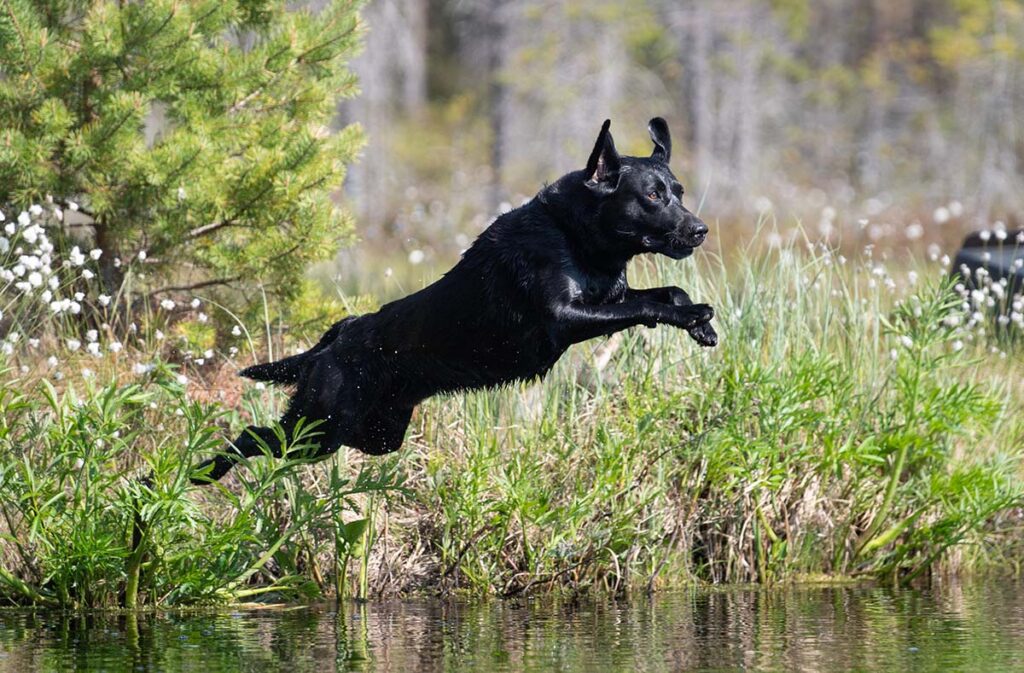
A dog that is intensely eager to please can be experiencing just as strong a stress response as a dog that is trying to flee or defend itself.
Acute stress is clearly visible
During a sudden stress reaction, such as when a dog is frightened, the dog’s entire demeanour changes from its normal state. In these situations, we can talk about the so-called “five Fs”, according to which a dog has five possible responses to a situation: “fight, flight, freeze, flirt, faint”.
The last three are somewhat less familiar to many people.
If a dog freezes in terror on a grooming table or at the veterinary clinic, the dog feels that there is nothing else left to do but surrender and wait for the worst. A dog that is intensely eager to please can also be experiencing just as strong a stress response as a dog that is trying to flee or defend itself. Sometimes, although more rarely, you may also see dogs that simply faint from terror and fear in a stressful situation.
Signs of stress and chronic stress
The way stress appears can vary enormously depending on the individual dog and the situation. Some of the most common signs of excessive stress include restless movement, panting, vocalising, dandruff, shedding, calming signals, drooling, an unpleasant smell, diarrhoea, tense muscles, trembling, a runny nose, shaking and stretching. The signs may be very obvious, but sometimes they can be much more difficult to notice.
Chronic stress is usually even harder to detect because the dog may not outwardly show the changes listed above, which are more commonly seen during acute stress. However, long-term stress can appear as a wide variety of behavioural symptoms, including compulsive barking and tail chasing. Mounting, restlessness, excessive scratching, chewing the paws and repetitive nesting behaviour can also indicate chronic stress when they become persistent behaviours.
Chronic stress may also show itself as withdrawal, reduced learning ability, digestive problems or a weakened immune system. Aggression and reactivity may also occur.
The harmful effects of cortisol have been widely studied, and it has been estimated that as many as 70% of all illnesses could be more or less stress-related.
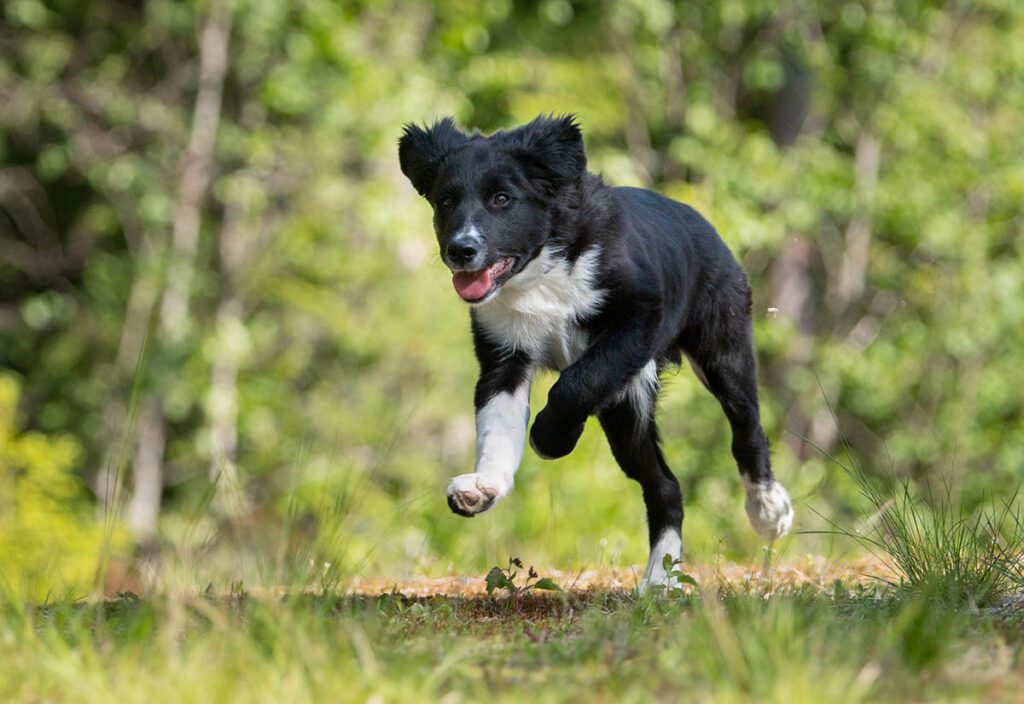
How to consider stress in dog sports
When a dog participates in an activity that makes them highly aroused, stress naturally accumulates. If this only happens once a week, the dog’s stress level will probably have time to decrease before the next session.
On the other hand, if the dog’s expectations towards an activity that happens only rarely are very high, the dog’s stress level may rise disproportionately compared with a situation that occurs more regularly and has therefore become more familiar and routine for the dog.
For example, agility, protection sports and flyball can raise a dog’s arousal level considerably. Naturally, the level of stress also depends on the dog’s personality, how the dog behaves while participating in the activity and how the skills have been trained. Even if the dog enjoys the sport, they may still experience a certain amount of ongoing stress and this load should be compensated for in order to avoid problems.
It is also important to remember that competition trips often create additional stress for dogs, even though they can also be enjoyable experiences and fun activities shared together.
Finding the right stress level for training
From a learning perspective, the ideal stress level is at the point where eustress begins to turn into distress. At this level, the dog learns quickly, observes the environment carefully and performs tasks accurately and rapidly.
However, finding exactly the right level of arousal and remaining there is very difficult. It requires special skills and a strong ability to read the dog from the trainer. It is often wiser to train the dog at a lower level of arousal so that the dog is more reliably able to remain within the range of positive eustress.
This makes training safer, more enjoyable for the dog and more supportive of their wellbeing.
A dog that is too stressed may appear extremely enthusiastic and active during training. At first, the dog’s performance may look perfect, but because of excessive arousal, they are unable to maintain the same pace for very long. The dog may begin rushing in different directions and staying still becomes difficult. They vocalise, try to steal the reward, offer incorrect behaviours and make mistakes. Training stops progressing and soon causes frustration for everyone involved.
Stress associated with anxiety or tension, on the other hand, often causes subdued and avoidant behaviour. The dog may try to leave the situation or use calming signals, such as scratching themselves or yawning, and may not seem to listen to commands. They may appear confused, afraid to take initiative or to try and they may even give up altogether.
Encouraging a dog more moderately often leads to faster learning results than excessively increasing their arousal.
Not every dog is suited to everything and a dog’s activities should support their overall wellbeing.
High working motivation or unbearable stress?
Sometimes, behaviour caused by an elevated stress level is interpreted as high arousal and strong working motivation and it may even be admired. However, if a dog simply cannot recover from an activity and continues to behave in an excessively overexcited manner both on the training field and in everyday life, a responsible owner should at least change their training style and, if necessary, the activity itself.
A person’s own preferences cannot come before the dog’s wellbeing. Not every dog is suited to everything and a dog’s activities should support their overall wellbeing. If participating in a particular activity or using the dog for work regularly appears to increase the dog’s stress level, it is absolutely necessary to consider a wide range of ways to help the dog cope with the load caused by these situations.
Lowering stress levels and supporting recovery
If stress has become chronic, the source of the stress must always be addressed first. Stressful situations, such as difficulties when passing other dogs, should be trained until they become manageable or at least tolerable. The dog’s everyday life should be carefully assessed. Pain and illnesses must be treated and the dog’s diet should be planned appropriately.
Some issues can initially only be managed or reduced because, for example, problems with passing other dogs do not disappear overnight.
The quality of exercise also deserves attention. Long, calm walks off lead in a natural forest environment are particularly effective at relieving stress in dogs. On the other hand, sometimes more energetic exercise may be appropriate to help the dog release excess energy.
However, this should not involve mindless running that increases the dog’s arousal even further. Activities such as swimming or long periods of calm trotting are more beneficial. Rest is just as important as exercise.
If a dog does not get enough proper rest, their nervous system can easily become overloaded to an extreme degree.
Many stressed dogs benefit from longer periods of scent-based work, searching for treats in the grass or activities such as nosework as a counterbalance to high-arousal sports like agility. Licking can effectively lower stress levels and special licking mats, such as LickiMats, have been developed for dogs. You can spread something like liver pâté on the mat. The familiar Kong toys are also excellent activities for helping dogs settle down.
It is important to consider how your own individual dog benefits most from these types of activities. Food that is too difficult or slow to access can cause frustration and increase stress in some dogs, while others may react differently.
Massage and stretching can help a dog relax. Dogs, like humans, have a vagus nerve, which is located relatively close to the surface in the neck area. This nerve is the most important nerve of the parasympathetic nervous system, the part of the nervous system responsible for calming the body.
Using long, steady strokes to gently stroke the dog from underneath the chin down towards the chest and between the front legs can activate this nerve and help calm the dog effectively.
Even if you do not know how to properly massage a dog, touch and stroking that imitate massage can release endorphins and lower stress levels. If a dog is nervous around other people, visiting a professional massage therapist may not even be possible.
If the owner themselves is constantly on edge, it is not fair to ask the dog to calm down. Dogs are constantly reading the people around them and in this situation, the dog experiences a strong conflict. The more sensitive the dog is, the more strongly they may react to these contradictions.
For this reason, handlers should also learn how to calm themselves and manage their own emotional state in order to better support their dogs.
Original author Piia Collan, 11 August 2023
Author Piia Collan
Piia Collan is a professional dog trainer based in Vääksy, Finland, working with dogs and their people at every stage of life. She helps build strong everyday skills, balanced training routines and a deeper cooperation between dogs and handlers — from puppies to adult and senior dogs. Piia’s approach is tailored to each dog and family, grounded in modern, dog-friendly training methods that support both learning and overall well-being. Her services are available locally, across Finland and internationally through online training and lectures. She offers private coaching, home visits, phone consultations, live online seminars and training courses. In addition, Piia provides exclusive in-home dog care, where dogs become part of her daily life during their stay. She also works closely with breeders and canine organizations, supporting responsible training and lifelong dog welfare.
Latest articles & product guides
- Joy of Dog Sports training toys: which dog training toy is right for your dog?
 Choosing the right training toy can make a surprisingly big difference to how much your dog enjoys playing and how useful the toy is in training. But with different shapes, sizes, fillings and designs available, how do you know which dog training toy is the…
 - Dog stress and recovery
 Dogs tolerate stress differently depending on factors such as their genetics and personality, age and stage of development, intended purpose, health and previous experiences. Stress cannot be avoided completely and there is no reason to fear mild stress. Most dogs cope well even with intense…
 - When your dog turns out not to be easy
 Not every dog is easy. Not every story can be neatly put back together. Not every kind of difficulty fits under the same heading. There are the ordinary challenges of everyday life that almost every dog owner encounters. And then there are situations that begin…
 - The teenage dog phase
 Adolescence is a long developmental stage that begins when the sensitive socialization period ends and puppyhood comes to a close. Some dogs mature well before the age of two, while for others the process takes significantly longer. This long teenage phase can be filled with…
 - ProPack bag family comparison – Which dog sports bag is right for you?
 ProPack bag family comparison – Which dog sports bag is right for you? When you spend long days training dogs, travelling to competitions or balancing everyday life with active dogs, having the right dog sports bag makes a huge difference. A well-designed dog training bag…



No Comments