

11 Aug When your dog turns out not to be easy
Not every dog is easy. Not every story can be neatly put back together. Not every kind of difficulty fits under the same heading.
There are the ordinary challenges of everyday life that almost every dog owner encounters. And then there are situations that begin to narrow your life, wear down your ability to cope and take everyday life in a direction you could never have anticipated.
Luck does not always mean having an easy dog. Luck is a dog and handler team that does not have to carry a burden that is too heavy for them.
The difficult admission
Who could you admit to that your own dog is taking all your energy? That your entire life revolves around the dog, that the atmosphere at home has become tense, your relationship is suffering and your own mind is becoming exhausted? What happens when things do not go well, when your dog is not easy and your life starts falling apart?
Sometimes this happens. Yet we talk about it far too little and sometimes not honestly enough. We are quick to look for reasons, but much less often do we talk about where to actually find help, support from others who understand or even a shoulder to lean on for a moment. Social media does not know you or your dog, yet many people remain glued to it even when it creates more restlessness than understanding.
A person living with a difficult dog can also become isolated long before anyone notices. From the outside, they may look committed, conscientious and determined. Inside, they may be exhausted, frightened and filled with a kind of shame that is difficult to put into words.
It is hard to say out loud that you love your dog, but you cannot keep living like this anymore.
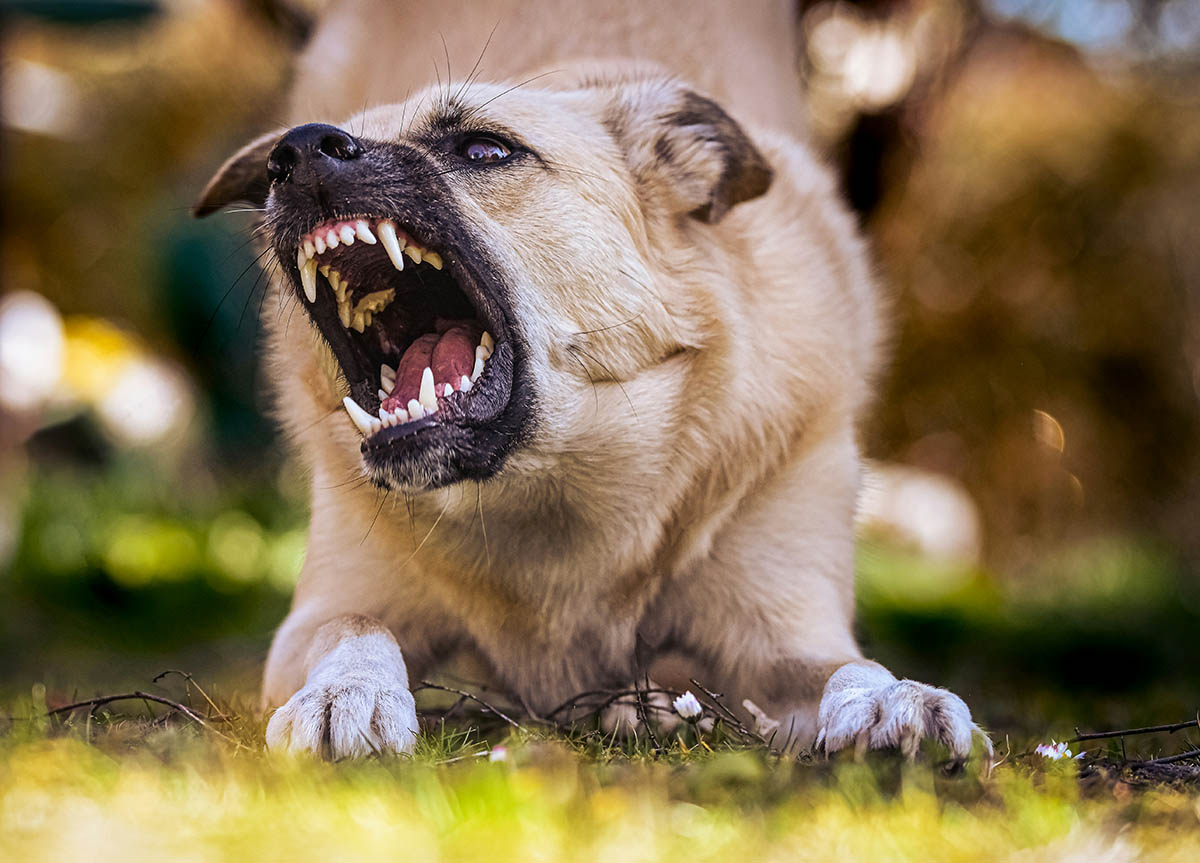
Living with a difficult dog does not always show on the outside as something dramatic. It shows as a life that gradually becomes smaller.
When life starts getting smaller
Living with a difficult dog does not always show on the outside as something dramatic. It shows as a life that gradually becomes smaller. You start avoiding certain routes. You feel anxious about encountering strangers before it even happens. Your own home no longer feels peaceful and your mind is constantly on high alert.
At first, many people try to endure, reorganize, understand and do more. At the same time, their own life gradually and almost unnoticed begins to shrink until everything is lived according to the dog’s needs.
At that point, it is no longer only about worrying about the dog. There is also grief, exhaustion, shame and sometimes a bitter question about why things turned out this way. Often, the disappointment in your own abilities is enormous, even when you have tried everything you possibly can and more. At the same time, you have to watch other people’s everyday lives seem to work in a way that feels increasingly out of reach for you. There is something particularly painful about that comparison because it hits precisely where you are already questioning yourself.
Living with a difficult dog can also make a person strangely invisible. If you cannot casually join in with others, cannot move around freely and cannot rely on ordinary everyday life, you may gradually begin to withdraw. From the outside, it may simply look like making arrangements and adapting. From the inside, it can feel as though your life is becoming a little smaller all the time.
Your own dog begins to place limits on everything. Even the happiest wagging tail cannot always erase what everyday life actually demands.
Love does not make everyday life easy
You cannot love someone into being healthy. Some problems can be so deep that changing homes, finding a professional or simply giving it time will not fix them. Sometimes a person does everything they know how to do and everything they have the strength to do and life still remains too heavy for both the dog and the person.
This is difficult to accept because many people want to believe that enough love, the right information or a sufficiently strong commitment will eventually turn everything around. The thought is comforting, but it is not always true. Not everything can be trained away. Not everything can be treated until it becomes manageable. And not everything eventually settles into a form where everyday life is genuinely good to live.
In a difficult situation, love can also blur our ability to assess what is really happening. The more the dog means to us, the harder it can be to see how heavy life has become. A person can easily start thinking that they simply need to try harder, cope better, find the next source of help or endure just a little longer. From the outside, this may look like commitment and responsibility. On the inside, it can also be fear, guilt and an inability to let go of the belief that everything should still somehow work out.
This is precisely where it becomes important to ask something other than how we can help the dog even more. We also need to ask what this dog’s life is actually like, what this person’s life is like and how much more either of them can realistically carry.
Love matters, but it cannot be the only measure.

Why is it so easy to be alone with a difficult dog?
A person living with a difficult dog often receives plenty of advice, but much less space to talk about how exhausting life has become. The conversation easily turns toward what else could be tried, what should be practiced, what may have been overlooked or what should be done next.
All of that can be useful, but it does not answer the question of what it feels like to live day after day in an everyday life that is draining you more and more. There is a lot that is good about our culture of helping, but it also has a blind spot. We often find it easier to talk about solutions than about the burden itself.
It is easier to talk about hope than to acknowledge that someone may already be very close to their limit. It is easier to talk about the dog’s rehabilitation than about what constantly being on alert does to a person. And so the owner can somehow end up alone in the middle of all the help that is being offered.
This is also a difficult position for professionals. Their job is to help, look for solutions and maintain hope. Because of that, it can almost feel forbidden to stop and ask whether life is still reasonable for either the dog or the person. Many professionals are afraid of saying too much at the wrong moment, being misunderstood or taking away the person’s last bit of hope.
Yet precisely in the most difficult situations, we need the ability to speak honestly about the fact that not every burden can be solved simply by trying harder.
Sometimes the hardest thing is not admitting that your dog has a problem. The hardest thing is admitting what that problem has done to your entire life.
The owner’s wellbeing matters too
The wellbeing of the dog is important. It should be. But when living with a difficult dog, it is easy for an atmosphere to develop where the person’s wellbeing starts to seem secondary, almost like an inconvenient side issue. As though being a good owner were measured by an endless ability to stretch yourself further, by how much you can carry, adapt, explain and tolerate. It should not be this way.
A person’s ability to cope is not a moral distraction from the situation. It is part of the reality. If your home is no longer peaceful, if your relationships are becoming strained, if your ability to work is beginning to deteriorate or if your entire life revolves around anticipating problems, you should not have to minimize that or feel ashamed of it.
Living with a difficult dog can become so deeply embedded in a person’s life that they themselves begin to regard their own burden as irrelevant. At that point, what they often need first is permission to see that their wellbeing matters too.
Responsibility does not mean carrying a dog at any cost while everything else around you collapses. Responsibility also means looking at reality as it is.
Sometimes the hardest thing is not admitting that your dog has a problem. The hardest thing is admitting what that problem has done to your entire life.
Hope is not the same as denial
Hope is necessary, but not the kind of hope that prevents us from seeing reality. Too often, hope is understood to mean that everything should still turn out well if we just try harder, find the right help or wait long enough.
Sometimes that is exactly what happens. Even very difficult situations can become easier. A more functional everyday life can be found with the dog, and a person can regain the feeling that their life belongs to them again.
But hope does not always mean that everything will eventually be fixed. Sometimes hope means finally beginning to talk honestly about the situation. It means that a person is allowed to say out loud how difficult things have been. It means having the courage to look at the dog’s life as it actually is, rather than as we hope it will one day be. It means that even when facing difficult choices, there can be someone who does not rush, judge or push you in one particular direction.
Honest hope does not promise that everything will become easy.
It only promises that a person does not have to remain alone with what is true.
The limit
I know what it feels like when a person has to look directly at their own limits. I know what it feels like to spend a long time trying to understand, organize, help and carry everything, while at the same time the rest of your life gradually begins to collapse around one dog. I also know how difficult it is to admit that you cannot save everything and make it into what you once hoped it would be.
That is why I do not want to write about this subject in a way that makes only one solution appear morally right. A person living with a difficult dog does not need more simplifications or ready made judgments. They need honesty, support and room to breathe.
Sometimes the story continues and life becomes easier. Sometimes, however, you reach a limit where compassion does not mean indifference. It means stopping yourself from lying about what you can still cope with, what the dog can still cope with and what life can realistically make possible.
Giving up does not always mean the same thing either. Sometimes it means looking for a new and more suitable home. Sometimes, however, you are facing a situation where there is no longer a life available for the dog that would genuinely be good and reasonable for them.
Neither situation should be treated lightly, but neither should be made impossible to consider or impossible to say out loud. In the most difficult situations, there is not always a good option and a bad option. Sometimes there are two bad options, neither of which feels right.
And still, a person who has lived with a difficult dog can be a good owner.
Sometimes the most important thing is not what the decision looks like from the outside, but whether the person has had the courage to look honestly enough at both the dog’s reality and their own.
Original author Piia Collan, 11 August 2026
Author Piia Collan
Piia Collan is a professional dog trainer based in Vääksy, Finland, working with dogs and their people at every stage of life. She helps build strong everyday skills, balanced training routines and a deeper cooperation between dogs and handlers — from puppies to adult and senior dogs. Piia’s approach is tailored to each dog and family, grounded in modern, dog-friendly training methods that support both learning and overall well-being. Her services are available locally, across Finland and internationally through online training and lectures. She offers private coaching, home visits, phone consultations, live online seminars and training courses. In addition, Piia provides exclusive in-home dog care, where dogs become part of her daily life during their stay. She also works closely with breeders and canine organizations, supporting responsible training and lifelong dog welfare.
Latest articles & product guides
- Joy of Dog Sports training toys: which dog training toy is right for your dog?
 Choosing the right training toy can make a surprisingly big difference to how much your dog enjoys playing and how useful the toy is in training. But with different shapes, sizes, fillings and designs available, how do you know which dog training toy is the…
 - Dog stress and recovery
 Dogs tolerate stress differently depending on factors such as their genetics and personality, age and stage of development, intended purpose, health and previous experiences. Stress cannot be avoided completely and there is no reason to fear mild stress. Most dogs cope well even with intense…
 - When your dog turns out not to be easy
 Not every dog is easy. Not every story can be neatly put back together. Not every kind of difficulty fits under the same heading. There are the ordinary challenges of everyday life that almost every dog owner encounters. And then there are situations that begin…
 - The teenage dog phase
 Adolescence is a long developmental stage that begins when the sensitive socialization period ends and puppyhood comes to a close. Some dogs mature well before the age of two, while for others the process takes significantly longer. This long teenage phase can be filled with…
 - ProPack bag family comparison – Which dog sports bag is right for you?
 ProPack bag family comparison – Which dog sports bag is right for you? When you spend long days training dogs, travelling to competitions or balancing everyday life with active dogs, having the right dog sports bag makes a huge difference. A well-designed dog training bag…

No Comments