

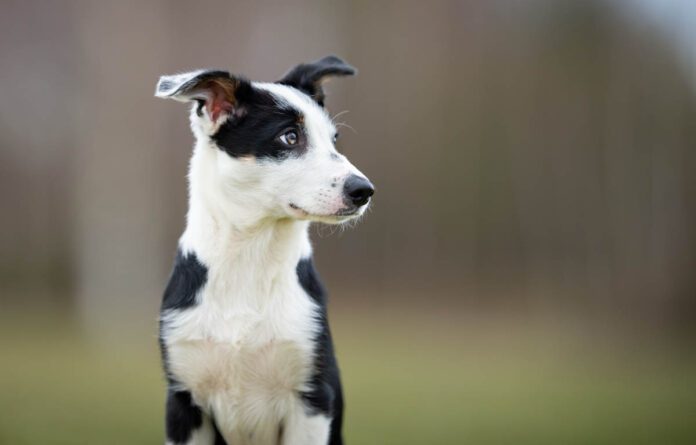
22 Apr A shy dog in training and dog sports
A dog’s shyness and fears can stem from many factors, including insufficient early-life experiences, genetic traits or unpleasant incidents. Fears also tend to generalize easily and most of them worsen over time, especially if nothing is done to address them.
Whenever we talk about fearfulness or shyness, it is important to define what we actually mean. One person might describe a dog as shy if it is uneasy around buses but otherwise confident in most situations. For someone else, a shy dog might be one that is intensely afraid of almost everything in its environment.
When you clearly understand the type and intensity of your own dog’s fearfulness, it becomes much easier to train and support it. The most important thing is to honestly acknowledge your dog’s sensitivity and the ways it appears, without exaggerating it.
It is also important to remember that shyness is not the dog’s only trait. Especially in a supportive environment, a shy dog can be very capable and functional. The owner’s challenge is to see both sides at the same time: the sensitive dog, but also everything else the dog is.
You need to know your dog well and especially learn to read its body language carefully. A shy dog’s signals can be very subtle, even when the emotion behind them is strong.
Knowing when to step back is a skill
When working with a fearful dog, calmness and patience are essential in every situation. A dog must never be punished for its fears or forced toward something it finds frightening. You should also avoid showing frustration or disappointment, as the dog will interpret this negatively and its fear may intensify.
In a scary situation, it is perfectly fine to pick the dog up or crouch beside it for support. If the human remains calm, this does not reinforce fear. However, excessive pitying often does.
Creating distance is usually the best way to handle a situation that has become too overwhelming. Sometimes this means ending the training session altogether. While leaving a class might feel like giving up, it is actually a sign of good observation skills and a win for both dog and handler.
The key difference is this: a dog that is truly afraid cannot learn, but a dog that is only slightly tense may still relax and adapt. This distinction is not always easy to see, which is why it is often better to play it safe.
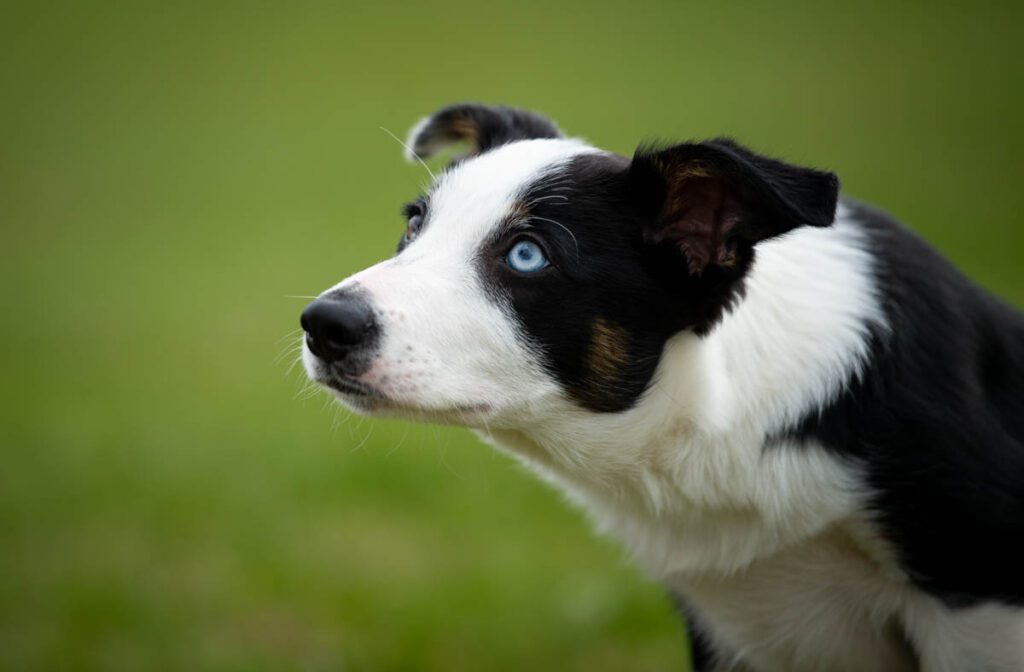
If a dog is afraid, it will not get used to the situation. But if it is only slightly uneasy, it may calm down and adapt.
A food-motivated dog can easily exceed its comfort zone
A fearful but highly food-motivated dog may approach a stranger to take a treat. In this situation, the dog is being rewarded while in the wrong emotional state. At the same time, it may push itself beyond its comfort zone just to get the reward.
This can happen repeatedly in training. Instead of helping, it may actually strengthen the dog’s fear.
The dog follows the treat into a situation that is too difficult and when the food disappears, it suddenly finds itself in a place that feels unsafe. This can lead to panic. Similar situations can occur when a dog is lured onto a slippery surface or into something like an agility tunnel that it finds intimidating.
Even if panic does not occur, tension often does. If the dog shows signs of stress or fear while performing a task, the training has progressed too quickly and in the wrong direction.
This is why luring is not always the best method for training a shy dog, even though it can sometimes produce quick results. Observing the dog’s emotional state must always come first. A behavior is not enjoyable for the dog if it is performed under pressure or fear.
With shy dogs, voluntary participation and initiative are crucial. Progress is almost always slower than with confident dogs, and the emotional state must be monitored constantly. This kind of slow, careful progress can be challenging for humans.
Safety behaviours that support the dog
A well-trained and meaningful “safety behaviour” can provide significant support for a fearful dog. It gives the dog something clear and predictable to do, along with a known outcome.
When the dog focuses on the task, its tension often decreases because it feels more in control.
A good example is a hand target, where the dog greets a person by touching their hand with its nose and then returns to the owner for a reward. A safety behaviour can also be a favorite trick, such as moving between the handler’s legs.
When trained using positive methods, with special attention to emotional state and relaxed training situations, the behaviour itself brings those positive associations back to the dog. This helps the dog feel more at ease.
However, a dog should never be forced to perform, especially when it is afraid. Commanding in such situations only makes things worse. Safety behaviours are best suited for situations where the dog feels only mild uncertainty and is still able to function.
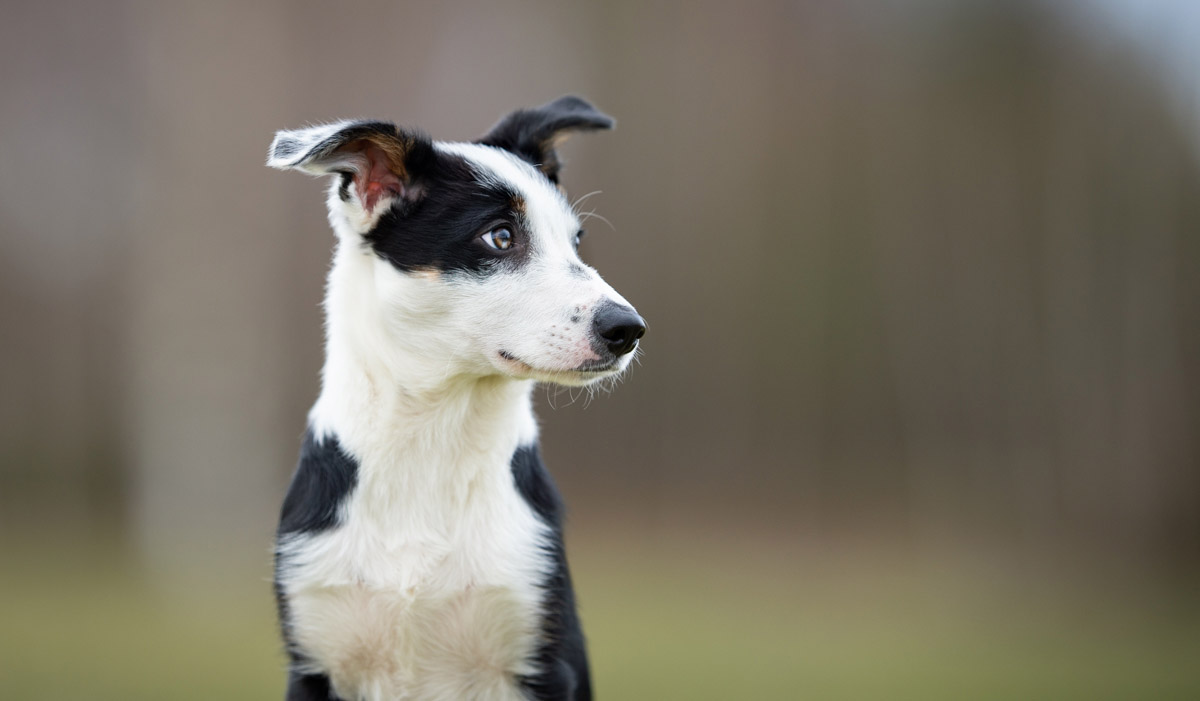
At its simplest, confidence and courage are built through exercises where the dog slightly challenges itself but always succeeds in the end.
Encouraging a shy dog
Even a shy dog can do many things and participate in different activities, as long as everything happens within its comfort zone. This may require lowering your expectations or even letting go of certain goals.
When the owner accepts the limitations that come with the dog’s sensitivity, it often becomes easier to find enjoyable shared activities.
Confidence-building activities can include tug games, where the dog almost always wins and is praised enthusiastically. However, some dogs may find even gentle tug play too overwhelming.
Scent work is particularly valuable. It is calming, builds independence and suits all dogs. Nosework is often especially suitable for shy dogs, as it is typically done independently, which can reduce stress. Tracking can also help build confidence, although starting with something like tuna rather than blood may be more appropriate for sensitive dogs.
Learning tricks at home is another great way to engage both the dog and the handler.
Using targets and a controlled training environment
In training, you should always start at a level where the dog can succeed consistently. Failure can quickly discourage a shy dog, reducing both its initiative and ability to function.
For this reason, when teaching new behaviors, it can be helpful to use targets or gentle guidance instead of pure shaping. These provide support and clarity, which shy dogs often need.
The training environment must be free of things that scare the dog and nothing unexpected should suddenly appear. This can be difficult to control outdoors, where sounds and stimuli are unpredictable. For this reason, training at home is often the best option.
If you want to attend group classes, many dog schools offer sessions specifically designed for shy dogs. These typically have smaller groups and arrangements that minimize stress, such as controlled entry points and extra time for the dog to settle in.
A crate or mat can also be trained as a safe space and used in different environments. For many dogs, a crate feels secure because it resembles a den. However, even in a safe space, the dog may still feel fear, so observation remains important.
Pheromones as support
Adaptil (dog appeasing pheromone/D.A.P) mimics the calming pheromones produced by nursing female dogs. It has been shown to help with various fear-related issues in adult dogs as well.
These pheromones are not absorbed into the body, which means they are not toxic and have no known side effects. They also do not affect the dog’s ability to perceive its environment.
The effect is often strongest after about two weeks of use. Since dogs detect pheromones through a specific sensory organ that is usually closed, the substance needs to be released into the air continuously. Products are available as plug-in diffusers and collars.
A pheromone collar can support a training or sport dog in certain situations, but it should never be used as a reason to push the dog beyond its limits. It is a support tool, not a shortcut.
Building confidence at home
At home, dogs are usually relaxed because the environment is familiar and safe. This makes it an ideal place to build confidence.
The simplest way is through exercises where the dog slightly challenges itself but always succeeds. For example, stepping on crinkly baking paper or knocking over empty plastic bottles.
Each small success builds confidence and courage. At the same time, it is important to remember that a shy dog will not perform like a naturally confident one. Its abilities and emotional state must always be taken into account and it should be set up to succeed.
Original author Piia Collan, 4 February 2023
Author Piia Collan
Piia Collan is a professional dog trainer based in Vääksy, Finland, working with dogs and their people at every stage of life. She helps build strong everyday skills, balanced training routines and a deeper cooperation between dogs and handlers — from puppies to adult and senior dogs. Piia’s approach is tailored to each dog and family, grounded in modern, dog-friendly training methods that support both learning and overall well-being. Her services are available locally, across Finland and internationally through online training and lectures. She offers private coaching, home visits, phone consultations, live online seminars and training courses. In addition, Piia provides exclusive in-home dog care, where dogs become part of her daily life during their stay. She also works closely with breeders and canine organizations, supporting responsible training and lifelong dog welfare.
Latest articles & product guides
- Joy of Dog Sports training toys: which dog training toy is right for your dog?
 Choosing the right training toy can make a surprisingly big difference to how much your dog enjoys playing and how useful the toy is in training. But with different shapes, sizes, fillings and designs available, how do you know which dog training toy is the…
 - Dog stress and recovery
 Dogs tolerate stress differently depending on factors such as their genetics and personality, age and stage of development, intended purpose, health and previous experiences. Stress cannot be avoided completely and there is no reason to fear mild stress. Most dogs cope well even with intense…
 - When your dog turns out not to be easy
 Not every dog is easy. Not every story can be neatly put back together. Not every kind of difficulty fits under the same heading. There are the ordinary challenges of everyday life that almost every dog owner encounters. And then there are situations that begin…
 - The teenage dog phase
 Adolescence is a long developmental stage that begins when the sensitive socialization period ends and puppyhood comes to a close. Some dogs mature well before the age of two, while for others the process takes significantly longer. This long teenage phase can be filled with…
 - ProPack bag family comparison – Which dog sports bag is right for you?
 ProPack bag family comparison – Which dog sports bag is right for you? When you spend long days training dogs, travelling to competitions or balancing everyday life with active dogs, having the right dog sports bag makes a huge difference. A well-designed dog training bag…

No Comments