

05 Mar When a new puppy joins the pack
When a new puppy arrives in a home where there are already other dogs, it is important to move through the introductions a little too slowly rather than rushing things. This is especially important if the older dog in the family is not particularly fond of puppies. Perhaps the dog has health issues, negative past experiences with other dogs, fears certain situations or is simply older. In such cases, rushing introductions can easily lead to problems.
If the breeds involved are generally less social with other dogs, you already have an additional challenge from the start. This is something that should be taken seriously. There are significant differences between breeds and individual dogs when it comes to dog-to-dog sociability and these limitations must be acknowledged.
“A puppy has the right to arrive in the most balanced home possible.”
It all starts with the owner’s skills and realism
Even before bringing home a new puppy, it is important to consider honestly whether the dog already living in the home is the kind of individual who could accept a new member into the pack, benefit from companionship and adapt to life in a multi-dog household. You should realistically assess how your current dog reacts to puppies and other dogs, as well as to new situations and changes in routine. Simply wanting another dog is not a sufficient reason.
Although the presence of another dog can make everyday life easier in many ways, behavioural problems such as separation anxiety rarely disappear simply because another dog is added to the household. A new puppy should never be seen as a solution to an older dog’s problems. These issues should be addressed before the puppy arrives. Otherwise there is a risk that the problems will escalate and the puppy may learn unwanted behaviours as well. A puppy deserves to arrive in a stable and balanced home environment.
Owners in multi-dog households must also have the skills and capacity to guide several dogs over the coming years so that each dog can thrive and have its needs met. Practical factors such as living space and available time must also be sufficient for the number of dogs in the household. Even though things often settle down eventually, it is wise in multi-dog homes to prepare mentally for the possibility that conflicts may arise between the dogs. These issues do not always disappear overnight.
Despite careful planning and a slow introduction process, some dogs simply never learn to get along with a new companion. For this reason, it is realistic to consider this possibility and have alternative plans in place.
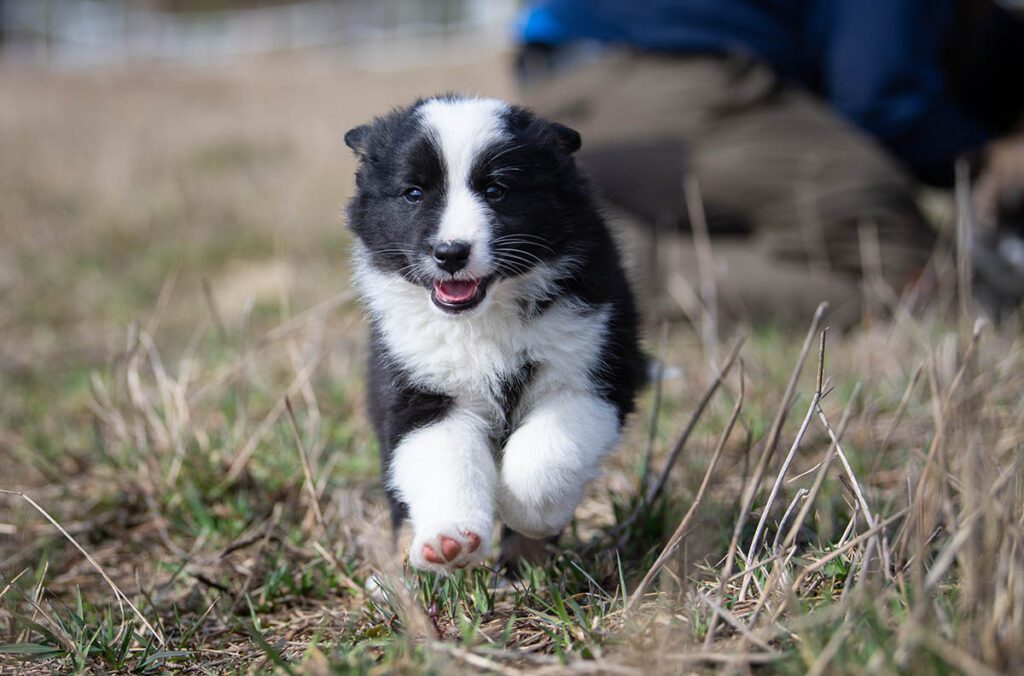
“Friendship begins with tolerating each other. One day you may suddenly realize that the other dog actually brings nice things along.”
The first meeting happens only once
Dogs should never be forced to interact with each other. The first meeting is best arranged in a spacious and safe environment, such as a fenced yard or through a gate. If possible, the meeting should take place somewhere that is not the older dog’s territory.
Because the first encounter cannot be undone, it is wiser to be slightly cautious rather than overly optimistic. An adult dog may instantly dislike the puppy and a frightened puppy may try to escape. Situations can escalate quickly.
If you are certain that the older dog is friendly toward puppies and you feel confident reading canine body language, you may allow the puppy and the adult dog to greet each other in the same space, for example in a fenced yard. Outdoor environments are usually better because they provide more room. With the puppy, you can crouch down so the puppy has the opportunity to seek safety from you if needed. Long leashes may also be used for additional safety. However, the leash should remain loose and should function only as a safety measure if necessary.
Any interaction can and should be interrupted if either dog becomes too stressed or uncomfortable. Especially in the beginning, it is better to interrupt interactions while the dogs are still feeling positive rather than waiting until irritation develops.
Sometimes it can be helpful to take the older dog for a walk immediately after meeting the puppy. This allows the puppy to explore the new home calmly on its own and helps reduce stress for both dogs. Another option is to step away with the puppy while the older dog stays behind to investigate the puppy’s scent. This approach acknowledges the needs of both dogs from the very beginning, which is important for building a balanced pack dynamic.
Gates and leashes create safety and space
It is perfectly acceptable for the first meeting to involve nothing more than observing each other from a distance. If the situation develops positively, the dogs can gradually move closer. Gates and fences are extremely useful tools because they create safe boundaries and controlled space. Often it is wiser to let dogs sniff each other through a gate before allowing a direct meeting. In some cases dogs may observe each other through a gate for several days before interacting freely. Sometimes this period may even be longer.
A gate is a valuable tool in many situations. In the beginning the dogs can spend time on opposite sides of the gate doing their own things, such as chewing bones, resting or simply relaxing. At first glance it may seem like nothing significant is happening. In reality it is very valuable if the dogs learn to stay calm whenever they are near the new companion. One simple way to build positive associations is to occasionally give treats near the gate while the other dog is resting nearby. Over time the presence of the other dog begins to predict something pleasant.
Friendship often begins with simple tolerance and gradually develops from there.
“From the very beginning, dogs must learn the most important rule of pack life: listen to your companion.”
Short moments together
Do not assume that the dogs will immediately begin playing together, even though this sometimes happens. Shared time may need to be carefully limited for quite some time so that it remains positive and high quality. At first the dogs may spend only short supervised moments together.
If there is any uncertainty about how the dogs may interact, supervision is essential. Whenever you leave the room it is usually safest to separate the dogs again. If this routine is followed consistently for the first few weeks and the dogs remain on good terms, the benefits may last for years.
In many multi-dog households dogs are fed separately and remain in separate areas when left alone. This naturally depends on the breed, temperament and behaviour of the individual dogs. While the puppy is still learning the household rules, it is important to ensure that it cannot accidentally do something the older dog will not tolerate. Dividing the living space is often the safest solution.
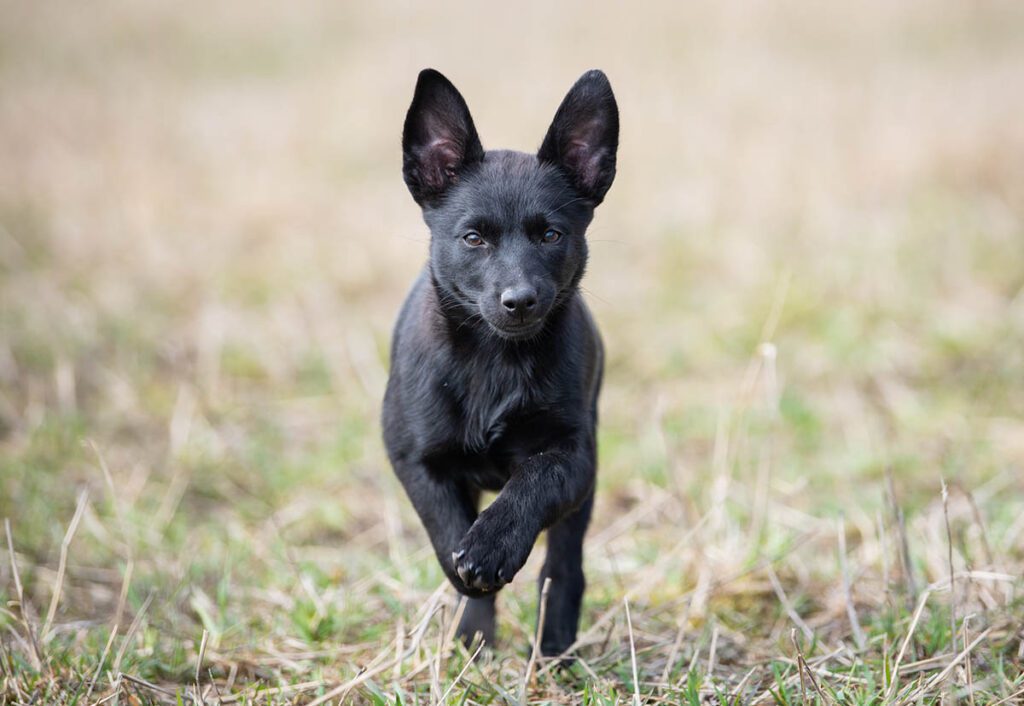
What if the older dog does not accept the puppy?
If the older dog does not accept the puppy, the dogs should not be forced to interact. Instead they should be given space and distance. Sometimes dogs eventually accept each other after an initial conflict. However, there is also a real risk that the older dog may seriously injure the puppy. This is not a risk worth taking. Dogs do not resolve disagreements without consequences. Even if no physical injuries occur, stress and fear levels may increase significantly. A fight may permanently damage the puppy’s trust in the older dog or even in other dogs in general.
If the older dog does not immediately accept the puppy, the puppy’s safety must always come first. The older dog should never be allowed to attack or harass the puppy. The puppy should be able to experience normal puppy life in a safe environment. At the same time, the older dog must also be understood. It cannot be punished for failing to accept something that it did not choose to have in its life.
The most important rule: listening
From the very beginning, dogs must learn the most important rule of pack life: listening to each other. The more subtle signals dogs learn to respond to, the fewer conflicts will arise. It is always better for the owner to interrupt interactions when the first signs of discomfort appear rather than waiting until one dog loses patience. Dogs can learn to respond more sensitively to each other’s signals, but this requires the owner to invest time, attention and observation.
Calming signals are behaviours dogs use to calm themselves or others. Turning the head away or licking the lips can communicate a similar message as a growl, but in a much more polite way. For example, if the older dog gives subtle signals and the puppy does not understand them, the puppy should be gently called away. The goal is to prevent escalation and teach dogs to respond to subtle communication so that stronger reactions, such as biting, never become necessary. This principle works both ways. The puppy also has the right to be heard when it communicates through small signals.
It can also be helpful to notice and praise calming signals between the dogs. For example, when dogs pause during play and shake themselves off, they are often calming the situation. Owners should look for these moments and reinforce appropriate communication. By observing, praising and occasionally interrupting interactions, the owner maintains the balance and safety of the pack while learning a great deal about their dogs’ behaviour and communication. Over time the entire pack becomes more balanced, and the owner becomes a more skilled guide for their dogs.
If, on the other hand, dogs constantly growl and snap at each other, subtle communication gets lost. Dogs may begin to rely on stronger signals in every situation, leading to more conflicts. Often the owner’s tone of voice becomes harsher as well, which escalates the situation quickly.
Whose world changes the most?
When a new puppy arrives, it is usually the older dog whose world changes the most. It is therefore important to maintain one-on-one time and shared activities with the older dog as part of everyday life. The puppy naturally requires a lot of attention, especially for training, so the older dog must receive dedicated attention as well.
For the puppy, it is also important to experience new things independently and grow into a confident individual — not simply follow the older dog everywhere. Puppies usually adapt quite quickly to their new family.
In reality, the biggest change is almost always experienced by the older dog. However, when balance and clear rules within the pack are maintained, a new puppy can become a wonderful opportunity and enrichment for the entire family.
Original author Piia Collan, 19 September 2023
Author Piia Collan
Piia Collan is a professional dog trainer based in Vääksy, Finland, working with dogs and their people at every stage of life. She helps build strong everyday skills, balanced training routines and a deeper cooperation between dogs and handlers — from puppies to adult and senior dogs. Piia’s approach is tailored to each dog and family, grounded in modern, dog-friendly training methods that support both learning and overall well-being. Her services are available locally, across Finland and internationally through online training and lectures. She offers private coaching, home visits, phone consultations, live online seminars and training courses. In addition, Piia provides exclusive in-home dog care, where dogs become part of her daily life during their stay. She also works closely with breeders and canine organizations, supporting responsible training and lifelong dog welfare.
Latest articles & product guides
- Joy of Dog Sports training toys: which dog training toy is right for your dog?
 Choosing the right training toy can make a surprisingly big difference to how much your dog enjoys playing and how useful the toy is in training. But with different shapes, sizes, fillings and designs available, how do you know which dog training toy is the…
 - Dog stress and recovery
 Dogs tolerate stress differently depending on factors such as their genetics and personality, age and stage of development, intended purpose, health and previous experiences. Stress cannot be avoided completely and there is no reason to fear mild stress. Most dogs cope well even with intense…
 - When your dog turns out not to be easy
 Not every dog is easy. Not every story can be neatly put back together. Not every kind of difficulty fits under the same heading. There are the ordinary challenges of everyday life that almost every dog owner encounters. And then there are situations that begin…
 - The teenage dog phase
 Adolescence is a long developmental stage that begins when the sensitive socialization period ends and puppyhood comes to a close. Some dogs mature well before the age of two, while for others the process takes significantly longer. This long teenage phase can be filled with…
 - ProPack bag family comparison – Which dog sports bag is right for you?
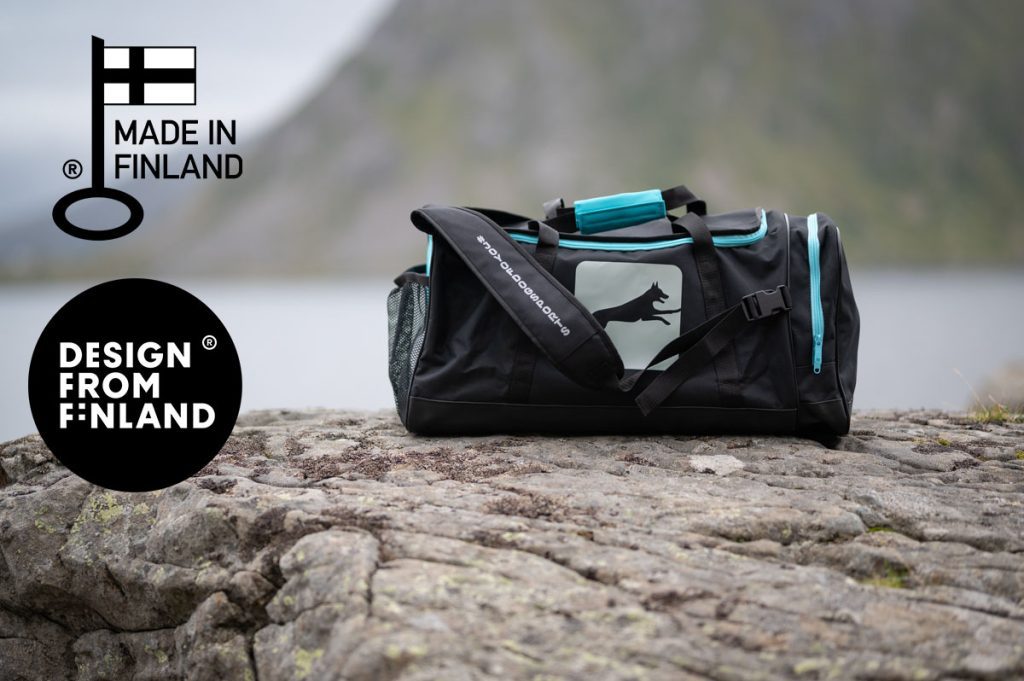
 ProPack bag family comparison – Which dog sports bag is right for you? When you spend long days training dogs, travelling to competitions or balancing everyday life with active dogs, having the right dog sports bag makes a huge difference. A well-designed dog training bag…
No Comments