

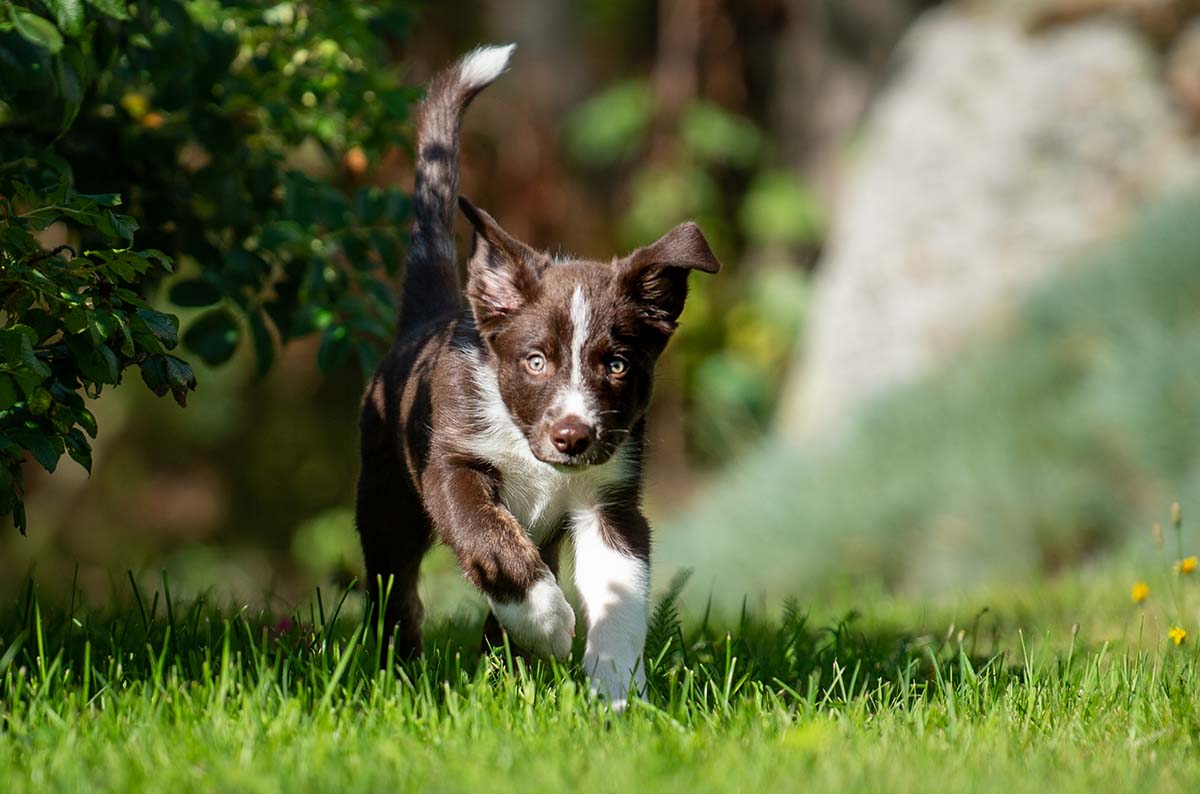
12 Feb Teaching recall to a puppy
Species-typical behaviour is often the most rewarding thing for a dog — and this is exactly why teaching recall can be challenging. Playing with another dog, sniffing the ground or chasing a rabbit are all examples of highly rewarding, natural behaviours for dogs.
In every situation, a dog will choose the option that is most beneficial to them. If you have something that your dog values more than what the environment offers, your dog will choose you.
Build the relationship first
To a puppy, their owner should be the best thing in the world. Being with their people is enjoyable because it means love, attention and treats. You should also play a lot with your puppy, as playing together strengthens your relationship significantly.
The relationship grows every time you give your puppy your attention. That’s why it’s important to make sure that the attention you give is always positive. Constantly correcting or scolding a puppy harms the relationship between dog and owner. Instead of repeated prohibitions, it’s better to use training and prevention to guide the puppy away from unwanted behaviour.
From the very beginning, reward your puppy whenever they voluntarily come to you or choose to stay close.
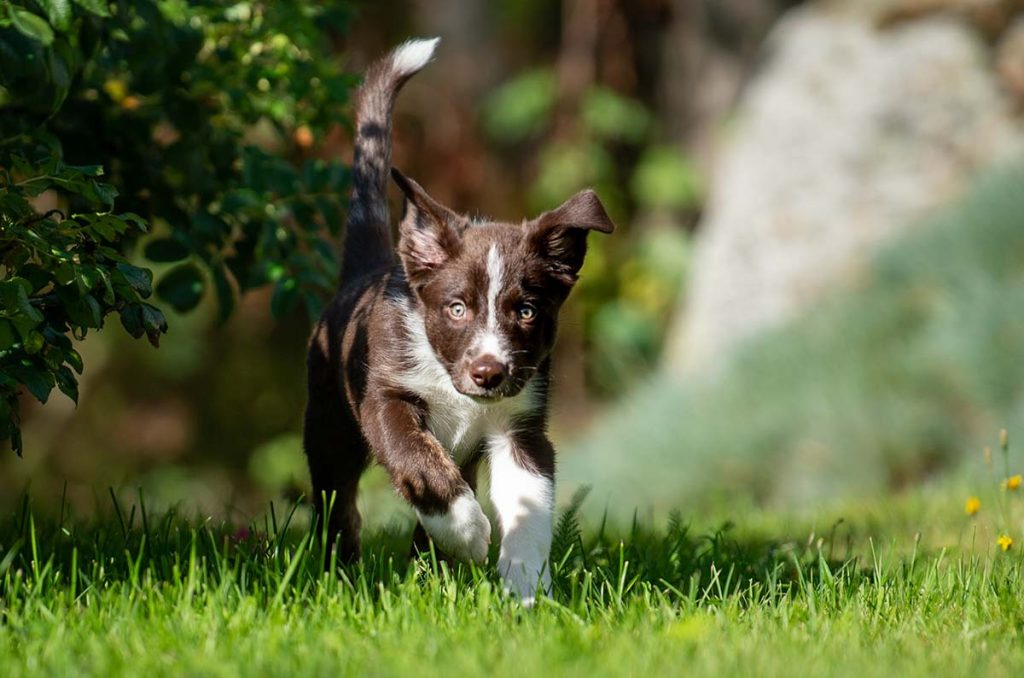
In every situation, your dog chooses what feels most rewarding — your job is to make sure that choice is you.
Train from day one
Right from the start, reward your puppy whenever they come to you on their own or remain nearby. This can be as simple as happy praise, petting, giving treats or even starting a short game of chase together.
In addition, call your puppy to you cheerfully several times a day — even just using their name — and reward them. Using playful, enthusiastic “baby talk” is often very effective, so don’t be afraid to sound silly. At this stage, don’t hold back on rewards or praise.
Once your puppy comes happily when called indoors, you can move training to your yard or another calm outdoor environment. Practising on a long line or in fenced areas is safe and highly recommended. A long line allows you to get many repetitions in different environments without the risk of your puppy running off. At this point, it’s important to bring out your very best rewards and most exciting toys.
The correct behaviour strengthens gradually when you make sure your puppy keeps succeeding — coming to you and enjoying being close. If recall doesn’t work in your own yard, it certainly won’t work when your puppy is playing with other dogs. Choose training environments carefully so that distractions are manageable, the puppy succeeds, gets rewarded and learns the right behaviour.
Progress should always be gradual. The more distracted the environment, the smaller the steps need to be. Moving forward slowly usually gets you to your goal faster. The most common training mistake is making exercises too difficult too quickly.
Quality and the jackpot reward
When training moves outdoors, quality becomes more important than quantity. Repetitions are still needed — thousands of them — but this is where the idea of a jackpot reward comes in.
You can carry your puppy’s entire daily food portion or an especially valuable treat in your pocket and give it when your puppy comes to you at full speed. Just two fast recalls per day rewarded with a jackpot make a strong impression and create a powerful association. The goal is to teach your puppy that recall is really worth it. You can use these super rewards occasionally throughout the dog’s life as a reminder.
Emotional state is also closely tied to quality. Train when your puppy is alert and energetic. This allows you to attach a positive emotional state and speed to the recall. If your dog starts slowing down when coming to you, check your own emotional state. Many dogs hesitate if they sense their owner is irritated — even if that irritation comes from something unrelated, like work stress.
A dog should never be punished or scolded for returning to you, even after running off for a long time.
The recall cue word (such as “come”) should only be added once the behaviour already exists and the dog is offering it.
A recall cue should never be repeated — one cue equals one successful recall.
Adding and using the recall cue
The cue word (for example, “come”) is added only after the behaviour is already happening. First, say the cue during the action, then at the beginning of the action and finally before the action.
So, when your puppy is already running toward you, call out “come.” After many repetitions, say “come” at the moment the puppy turns and starts running toward you. In the third phase, the cue itself should trigger the recall.
Especially in the early stages, make sure the puppy is truly running toward you and not veering past you or stopping along the way.
During training, use the recall cue only when you are confident the puppy can succeed. Always assess whether the situation allows for success. A cue that does not result in recall quickly loses its meaning. Do not repeat the cue — one cue equals one recall.
Reward your puppy immediately upon arrival. If you ask them to sit first or delay the reward too long, the puppy may no longer associate the reward with coming to you.
You can also condition the puppy so that the recall cue always predicts a treat — just like in clicker training. Carry small, highly tasty treats. When the puppy is already close to you, say the cue and immediately give a treat. The puppy learns that every single cue means a reward.
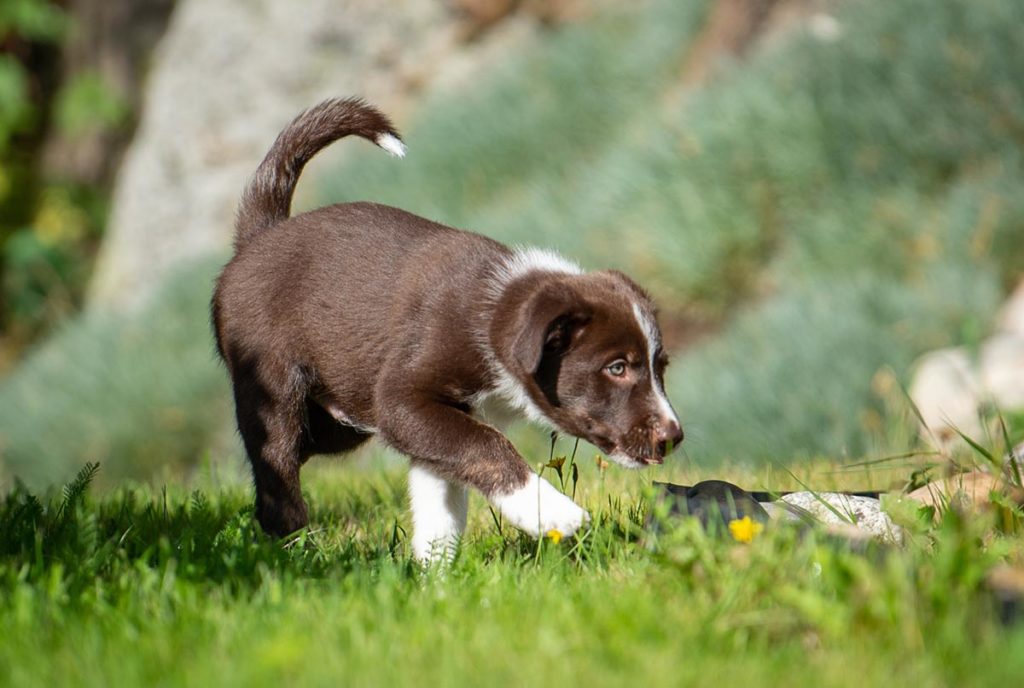
Puppy running off in another direction?
If your puppy is too interested in the world around them, the most effective response is often to run cheerfully in the opposite direction. Encourage them, throw a toy, scatter treats, crouch down and show them how fun it is where you are.
Trying to chase a puppy rarely works. It can turn into a game of tag or even frighten the puppy. Prevent these situations by actively scanning your environment and staying alert — and keeping your phone in your pocket.
Common problems and how to prevent them
Deliver treats close to your body and gently touch the collar, harness or neck at the same time. This prevents creating a dog that dodges when you try to actually catch them. It also helps the puppy get used to people approaching from above — something humans often do unintentionally.
This can be practised with every treat, even during other training exercises. Small dogs and puppies often stay just out of reach because a person bending over and staring can signal “give me space” in dog language.
If your puppy is wild, spinning around, and won’t let you catch them, try tossing treats on the ground near you. The puppy will calm down while sniffing and eating, allowing you to take hold of them. Avoid sudden grabbing motions — these can either turn into a fun game or scare the puppy. Take your time with treat scattering so the puppy truly disengages from the chase. You can also slowly move toward a safer place, such as home.
Dogs learn human patterns very quickly. Avoid always clipping the leash on in the same spot or holding it in the same way before doing so. You can also teach that clipping the leash on always results in an extra reward.
Move forward slowly in training — slower progress today means faster results tomorrow.
The easiest beginner exercise
Start by walking in zigzags. First indoors, then in your yard and gradually in more challenging environments. The puppy can be on a long line, but it should stay loose. Forest environments are especially fun — you can weave between trees and even hide occasionally. If possible, the puppy can be off-leash.
Reward whenever the puppy comes close, looks at you or chooses you. Change direction and speed, be unpredictable. Observe your puppy carefully so you don’t trip over them or the line. Don’t guide or pull the leash if the puppy moves away — wait instead. You can always call them and reward.
Turn this into a fun chasing game: “Oops, I went this way — can you keep up?” Let the puppy catch you, reward and immediately dash off in another direction. Puppies love chasing their humans, which adds speed and enthusiasm. Attach the recall cue when the puppy runs toward you. Use a happy, encouraging voice and high-value rewards.
If pant legs are at risk or the puppy gets too wild, you can reward by tossing several treats on the ground to calm them through sniffing. Always consider the puppy’s size and stamina — young puppies can’t run long distances repeatedly.
Speeding up recall – the helper exercise
Ask a helper to hold the puppy securely, with all four paws on the ground. The helper can hold the harness, chest or sides — always prioritising safety and comfort. If using a leash or long line, ensure it doesn’t tighten, tangle around legs or catch on anything.
Move a few metres away and excite the puppy using your voice, body language or their favourite toy. When the puppy can barely contain themselves, the helper releases them. At the exact moment the puppy launches toward you, say the cue clearly and confidently: “come!”
When the puppy reaches you, praise generously and reward with treats and/or play.
Gradually increase the distance, but don’t rush progress. Keeping the puppy’s enthusiasm and speed is more important than making things harder too quickly. As skills improve, you can add temptations along the way — toys, other people or treats.
Original author Piia Collan, 3 April 2022
Author Piia Collan
Piia Collan is a professional dog trainer based in Vääksy, Finland, working with dogs and their people at every stage of life. She helps build strong everyday skills, balanced training routines and a deeper cooperation between dogs and handlers — from puppies to adult and senior dogs. Piia’s approach is tailored to each dog and family, grounded in modern, dog-friendly training methods that support both learning and overall well-being. Her services are available locally, across Finland and internationally through online training and lectures. She offers private coaching, home visits, phone consultations, live online seminars and training courses. In addition, Piia provides exclusive in-home dog care, where dogs become part of her daily life during their stay. She also works closely with breeders and canine organizations, supporting responsible training and lifelong dog welfare.
Latest articles & product guides
- Joy of Dog Sports training toys: which dog training toy is right for your dog?
 Choosing the right training toy can make a surprisingly big difference to how much your dog enjoys playing and how useful the toy is in training. But with different shapes, sizes, fillings and designs available, how do you know which dog training toy is the…
 - Dog stress and recovery
 Dogs tolerate stress differently depending on factors such as their genetics and personality, age and stage of development, intended purpose, health and previous experiences. Stress cannot be avoided completely and there is no reason to fear mild stress. Most dogs cope well even with intense…
 - When your dog turns out not to be easy
 Not every dog is easy. Not every story can be neatly put back together. Not every kind of difficulty fits under the same heading. There are the ordinary challenges of everyday life that almost every dog owner encounters. And then there are situations that begin…
 - The teenage dog phase
 Adolescence is a long developmental stage that begins when the sensitive socialization period ends and puppyhood comes to a close. Some dogs mature well before the age of two, while for others the process takes significantly longer. This long teenage phase can be filled with…
 - ProPack bag family comparison – Which dog sports bag is right for you?
 ProPack bag family comparison – Which dog sports bag is right for you? When you spend long days training dogs, travelling to competitions or balancing everyday life with active dogs, having the right dog sports bag makes a huge difference. A well-designed dog training bag…
No Comments