

23 Jan Calmness is taught in daily life – not just in training
Dogs are learning all the time — whether we intend to teach them or not. Learning doesn’t happen only during structured training sessions. That’s why it’s worth observing how your dog behaves in everyday situations and considering how those moments could be used as part of training.
Calming down should be taught slowly, carefully, and first and foremost in everyday life. This ensures that the dog’s emotional state is truly calm — not just a dog that lies still while remaining internally aroused. Calmness should never be a trick or a position; it should be a state of mind.
What is the Premack principle?
You might remember hearing something like this as a child: “Eat your vegetables first, then you can have dessert.” This is a classic example of the Premack principle.
According to this principle, a less preferred behavior is strengthened when it is followed by a highly rewarding one. For example, when a dog waits for permission or gives up sniffing an interesting scent, the skills of self-control and calmness are reinforced — because giving up leads to something desirable.
The principle also works the other way around. If a dog is allowed to reach an exciting scent while pulling on the leash, leash pulling becomes strongly reinforced. Behaviors that are species- and breed-typical — such as going outside, sniffing, running freely — are highly rewarding for dogs, and learning connected to them is especially powerful. Human attention also works as a strong reward for many dogs.
It’s worth stopping to reflect on what actually happens in everyday life. Are there situations where the dog gets what it wants through behavior you would rather not reinforce? For example, does the dog receive attention — even in the form of saying no — when jumping up? Does someone in the family eventually give in after prolonged whining or staring and start playing or hand over a treat?
Understanding the Premack principle helps handlers recognize what their dog truly experiences as rewarding. It turns the owner into a more skillful user of reinforcement. Perhaps the biggest benefit is that everyday life suddenly becomes full of training opportunities. After all, this is where most manners are taught — and where the foundations of sport and working dogs are built.
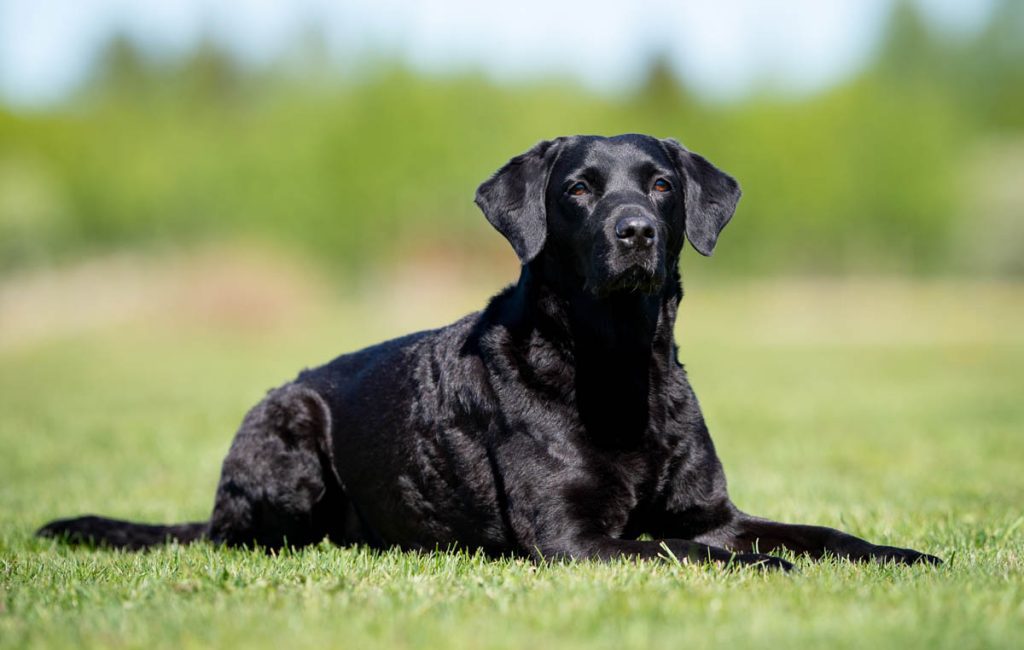
Calmness should not be a trick — it should be an emotional state.
How do you walk out the door?
We pass through doors multiple times every day, and it’s never too late to teach a dog to calm down before exiting the house. Going outside must be something the dog actually wants, however — if the dog is afraid to leave the home, going out obviously won’t work as a reward.
If the situation is very chaotic, you can start by simply waiting for the jumping to ease even slightly. Over time, the goal can be that the front door is open, but the dog doesn’t go out until given permission. This process needs to be broken down into very small steps — the more aroused the dog, the smaller the steps must be.
Frustration makes things worse, so the dog needs to receive reinforcement even when it initially does approximately what is desired — even if only a little.
From a learning perspective, it’s often more effective to wait for the dog to figure out on its own which behavior leads to success. Saying “sit down” may be unnecessary, especially if it doesn’t work anyway. Instead, wait and observe carefully — and reward immediately (by opening the door or allowing the dog to go out) when the dog moves in the right direction. Over time, the behavior naturally shapes toward the goal.
Slowing down on walks
A dog that never sniffs on walks is rarely a relaxed dog. It’s helpful to consciously slow down from time to time. Walking slowly may initially be difficult for the dog, but little by little it will realize that this is a moment for sniffing.
You can encourage sniffing by walking in a slight zigzag, looking at the ground yourself, and pretending to examine blades of grass. You can also stop to observe the surroundings from a park bench, gently pet your dog, or ask it to sit — then continue once the dog has been still for a moment.
This usually works well because after sniffing freely, the dog is already relaxed. You are then practicing calm behavior in the right emotional state. At this stage, it’s a good idea to introduce a cue word, such as “easy/calm.”
That said, you should always observe the dog’s emotional state carefully. For example, the scent of a female in heat may increase arousal in a male dog, while the scent of a particular dog may cause fear in another individual.
Your own calm presence — breathing deeply and settling yourself — helps every dog relax.
Using body language to support calmness
Yawning, stretching, nesting movements (such as pawing at a cushion), and deep sighs before resting are all calming signals dogs naturally use. These behaviors can also be mimicked by humans.
You can use one or several of these gestures when sitting down to wait or preparing for a nap. By doing so, you guide the dog toward the right emotional state through your own example. Once the dog begins to relax in these situations, it’s easy to associate a cue word with the behavior.
Gradually, the exercise can be made more challenging: relaxing while the TV is on, while children are playing upstairs, when guests are visiting, and so on. In other words, you introduce distractions and generalize the skill by practicing in different environments.
You can also actively observe your dog’s behavior in daily life. When the dog sighs and lies down, or calmly sits while waiting, you can say the cue word. This creates multiple successful repetitions every day without formal training sessions.
Touch as a tool for calmness
Touch can support relaxation, but whether and how it works varies by individual dog. Some dogs prefer close contact, others relax better with their own space.
It’s worth experimenting with different types of touch while carefully observing the dog. You can pause while petting and allow the dog to move away. If the dog stays, the touch is likely pleasant. Many dogs even offer a clear signal for “more” — nudging your hand with their nose or shifting closer.
Dogs, like humans, have a vagus nerve that runs close to the surface of the neck. This nerve is a key part of the parasympathetic nervous system — the system responsible for calming the body. Slow, steady strokes from the chin down to the chest can activate this nerve and effectively calm the dog.
Even if you don’t know how to massage, massage-like touch and gentle stroking release endorphins and lower stress levels. When the dog is resting beside or on you, consistently using a specific type or location of touch helps create an association between that touch and calmness. Over time, the same touch may help calm an aroused dog in other situations as well.
Voice and presence matter
Tone of voice plays a huge role in how dogs perceive communication. A monotonous voice is uninteresting, while high-pitched excited talk energizes almost any dog. Angry commands suppress and discourage. Encouraging praise supports effort.
If you want your dog to calm down, try speaking more slowly and slightly lower than usual. Use gentle praise with elongated vowels, such as “goooood… niiiice.” For some dogs, calm, steady talking in a soft rhythm is also helpful. As always, individual differences apply.
Your own emotional state is crucial. It’s unfair to expect a dog to calm down if you yourself are tense and restless. Dogs read us constantly, and sensitive dogs react strongly to emotional contradictions. Handlers, too, need to practice emotional regulation. Calmness is built on a strong relationship and mutual trust.
A dog doesn’t have to be perfectly well-behaved all the time, or always neutral and invisible. You should never expect perfection.
When calmness just doesn’t happen
If calming down isn’t working, getting frustrated won’t help. Instead, consider possible underlying reasons. Is the dog in pain? Already overstimulated? Are you stressed?
Most often, the issue is simply that too much has been asked too soon. One of the most common training mistakes is progressing too quickly. A dog needs to learn to wait calmly by the front door before it can relax while watching others train on an agility field.
There will also be moments when the dog genuinely needs to release energy — and that’s perfectly okay. Dogs are allowed to be dogs. Sometimes they should be allowed to get excited.
A dog does not need to be perfectly well-mannered at all times or neutral and invisible. Perfection should never be the goal. Balance, wellbeing, and emotional safety matter far more.
Original author Piia Collan, 10 February 2022
Author Piia Collan
Piia Collan is a professional dog trainer based in Vääksy, Finland, working with dogs and their people at every stage of life. She helps build strong everyday skills, balanced training routines and a deeper cooperation between dogs and handlers — from puppies to adult and senior dogs. Piia’s approach is tailored to each dog and family, grounded in modern, dog-friendly training methods that support both learning and overall well-being. Her services are available locally, across Finland and internationally through online training and lectures. She offers private coaching, home visits, phone consultations, live online seminars and training courses. In addition, Piia provides exclusive in-home dog care, where dogs become part of her daily life during their stay. She also works closely with breeders and canine organizations, supporting responsible training and lifelong dog welfare.
Latest articles & product guides
- Joy of Dog Sports training toys: which dog training toy is right for your dog?
 Choosing the right training toy can make a surprisingly big difference to how much your dog enjoys playing and how useful the toy is in training. But with different shapes, sizes, fillings and designs available, how do you know which dog training toy is the…
 - Dog stress and recovery
 Dogs tolerate stress differently depending on factors such as their genetics and personality, age and stage of development, intended purpose, health and previous experiences. Stress cannot be avoided completely and there is no reason to fear mild stress. Most dogs cope well even with intense…
 - When your dog turns out not to be easy
 Not every dog is easy. Not every story can be neatly put back together. Not every kind of difficulty fits under the same heading. There are the ordinary challenges of everyday life that almost every dog owner encounters. And then there are situations that begin…
 - The teenage dog phase
 Adolescence is a long developmental stage that begins when the sensitive socialization period ends and puppyhood comes to a close. Some dogs mature well before the age of two, while for others the process takes significantly longer. This long teenage phase can be filled with…
 - ProPack bag family comparison – Which dog sports bag is right for you?
 ProPack bag family comparison – Which dog sports bag is right for you? When you spend long days training dogs, travelling to competitions or balancing everyday life with active dogs, having the right dog sports bag makes a huge difference. A well-designed dog training bag…
No Comments