

25 May The teenage dog phase
Adolescence is a long developmental stage that begins when the sensitive socialization period ends and puppyhood comes to a close. Some dogs mature well before the age of two, while for others the process takes significantly longer.
This long teenage phase can be filled with all kinds of growth-related challenges. A young, unfinished dog should therefore be treated with patience throughout its entire adolescence and with especially deep understanding during the actual teenage phase. Canine adolescence is a completely normal and necessary part of a dog’s development, but it can also be an extremely challenging time for both the dog and the owner.
Behavioral changes during adolescence are highly individual and vary between breeds. The actual teenage phase usually begins shortly before the dog turns one year old and may last anywhere from a few weeks to several months. In female dogs, adolescence often begins around the first heat cycle. The timing of the first heat varies greatly depending on breed and individual, usually somewhere between six months and one and a half years of age.
For male dogs, this stage begins once they reach sexual maturity, which usually happens around eight to nine months of age. Behavioral changes are not always as dramatic in males as they can be in females, but male dogs often stay in the adolescent phase considerably longer.
The ears stop working and the friend group changes
During adolescence, many of the dog’s skills weaken or may even disappear completely. The dog may suddenly begin pulling on leash, barking and lunging at other dogs, marking indoors or guarding important resources. Challenges with being left alone can appear, destructive behavior at home becomes common and the dog may become suspicious of unfamiliar people. Frustration tolerance often decreases and concentration becomes weaker as well.
A puppy is usually naturally interested in its owner and rewards, but as sexual maturity approaches, the dog’s interests begin to shift. Hormones and reproductive instincts can completely take over the dog’s mind. To human eyes, the dog may suddenly seem difficult and stubborn. It only wants to sniff the wonderful scent trail another dog has left behind and could not care less about meatballs or the owner’s commands.
Owners often feel like their dog has “lost its ears,” but in reality the dog is simply not capable of noticing the owner or responding to commands in that moment.
Teenage dogs also become more selective about which dogs they want to befriend and play with. They may only accept dogs of the same breed or the opposite sex as companions. This should be allowed. Good canine friends teach important social skills that are often missing or unstable during adolescence and still require support. Bad interactions benefit no one and a dog does not need to be friends with every dog it meets.
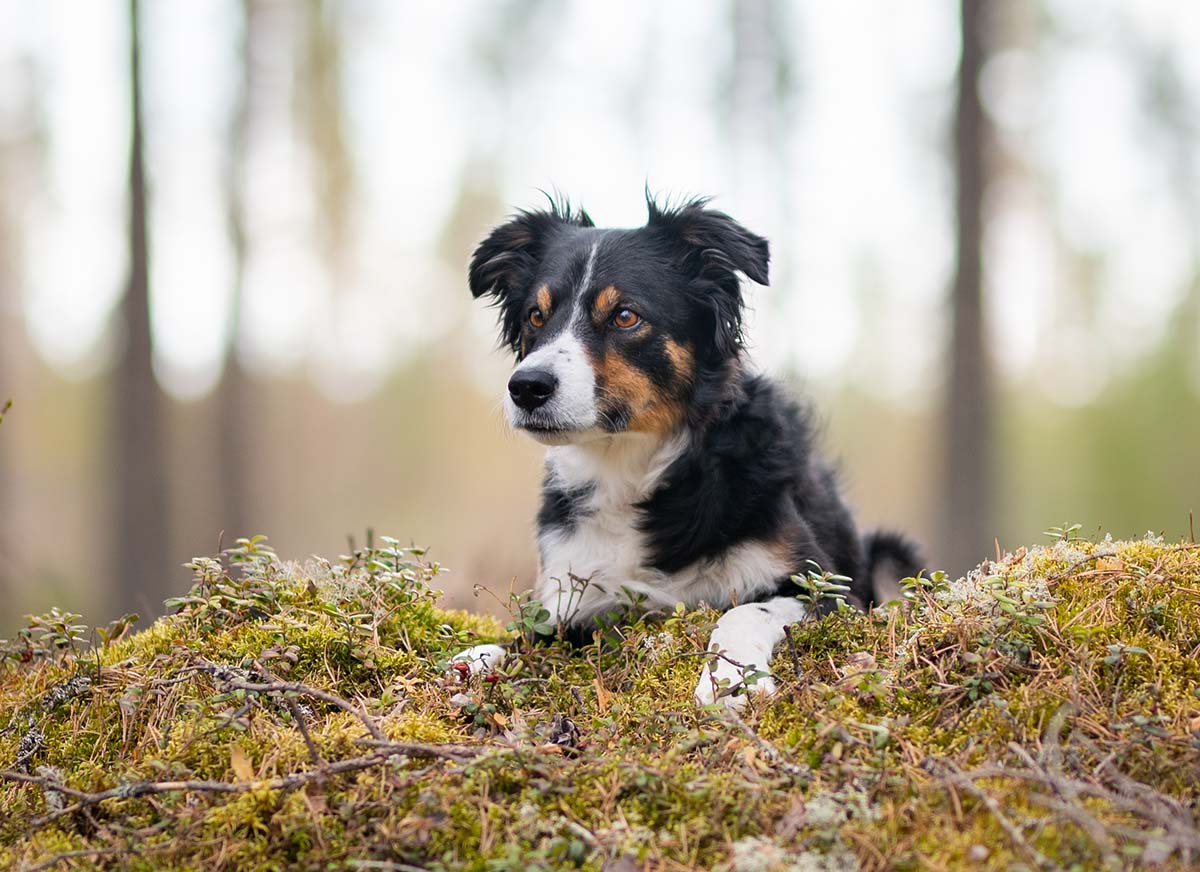
During adolescence, many of the dog’s skills weaken or may even disappear completely.
Fear is real for the dog
During adolescence, dogs may suddenly become afraid of completely ordinary things they previously ignored without issue. Startling reactions are often stronger in dim light and owners may feel like the dog is reacting to “nothing.” But for the dog, fear and startling responses are always real.
Sometimes this phenomenon is referred to as a “fear period” or “ghost phase.” However, not every dog experiences a distinct fear period, even though insecurity often increases in teenage dogs regardless.
Fear should not be reinforced by making a huge fuss over it or excessively comforting the dog. However, if a dog is truly frightened, it should of course be removed from the situation immediately. You may pick the dog up or crouch down to support it without strengthening the emotional state. What makes the situation worse is the owner panicking or pitying the dog.
With insecure dogs, the owner’s calmness is one of the most important factors because it provides significant support and security to the dog.
When a dog feels nervous, the smartest approach is often to create more distance from the frightening thing. This allows the dog to observe the situation calmly from farther away while being rewarded, encouraged and praised for remaining relaxed.
Very often, distance and giving the dog enough time helps the situation resolve naturally. However, if the fear period seems to continue for more than four months or begins interfering with daily life, the issue can no longer be explained by adolescence alone and additional support may be needed.
Teenage dogs are not being defiant
Teenage dogs often do not know what they are supposed to do and are therefore genuinely confused. Hormonal changes and shifts in neurotransmitters such as serotonin, which affects aggression, are real biological processes that influence behavior and learning ability.
It is extremely common for a young dog’s energy, heightened instincts, emotions and impulsive reactions to create all kinds of conflicts.
If the owner interprets these conflicts as the dog “challenging authority,” serious problems can quickly follow. When an insecure young dog is corrected harshly or forced because the owner believes the dog is rebelling, the dog only becomes more insecure. Its tolerance threshold is quickly exceeded.
From the dog’s perspective, the owner’s behavior becomes confusing and even frightening and the dog no longer knows how to behave correctly at all. The dog’s reactions intensify, the owner may become harsher in response and the cycle is complete.
Even behavior that feels impossible to handle is not rebellion or defiance. Young dogs are insecure and sensitive. Especially with adolescent dogs, owners should avoid immediately assuming that training has failed. Normal developmental stages do not need someone to blame. They simply need to be managed.
Young dogs need large amounts of support, guidance and understanding. The person at the other end of the leash also needs those same things in order to cope calmly with an adolescent dog.
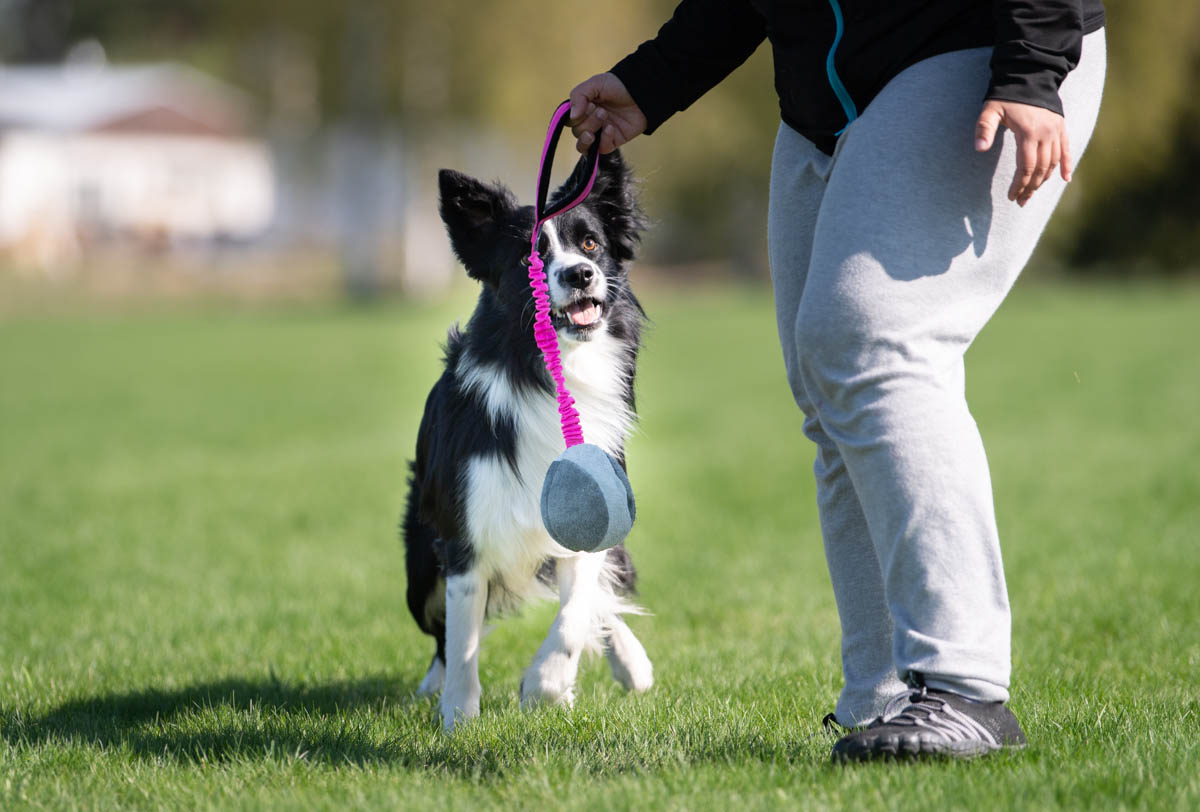
The purpose of management is to make unwanted behavior impossible to rehearse. Management is therefore an essential part of both training and raising a dog.
Good timing and creativity matter
It is extremely important to treat young dogs consistently, calmly and firmly. Rules still matter. A teenage dog cannot simply be allowed to behave however it wants.
At the same time, owners should carefully ensure that only correct behavior becomes rewarding for the dog.
The purpose of management is to prevent unwanted behavior from happening in the first place. This is a crucial part of training and raising a dog, especially when a skill is not yet reliable or the situation is too difficult for the dog to succeed.
For example, a dog that suddenly begins running off during adolescence can temporarily be walked on a long line during the peak hormonal phase. This prevents unwanted behavior from becoming self rewarding because the dog never gets the opportunity to rehearse it freely.
If unwanted behavior does occur, the owner should make sure the dog does not achieve what it wanted through that behavior. This is always more difficult than preventing the situation in advance, which is why life becomes much easier when owners learn to anticipate situations and develop better timing.
People are often surprisingly creative when they stop and think for even a moment. There is almost always a dog friendly solution that works for a young dog.
When a male dog freezes during a walk and sniffs intensely at the scent left behind by a female in heat, owners often respond by pulling on the leash and shouting commands completely in vain. Another option is to simply allow the dog to fulfill a natural species-specific need for a moment.
If you are in a hurry, you can instead walk calmly next to the dog, gently lift its head away from the scent, wait for the dog to reorient itself to the environment and then encourage it to continue with a reward.
Adolescent dogs are generally not in the best stage for learning difficult new skills. Instead, this is the time to strengthen and reinforce behaviors the dog already knows.
The quantity and quality of activity matters
During adolescence, a dog’s need for activity is at its highest and all that overflowing energy must be directed into sensible outlets. Otherwise, problems are almost inevitable.
At the same time, rest is equally important. If a young dog is constantly operating at maximum intensity, the stress load alone can become overwhelming.
Exciting activities should ideally end with calming exercises such as scattering treats on the ground for the dog to sniff out. Activities that create excessive arousal may even need to be limited temporarily.
Many dogs love fetch games, for example, but these prey-drive based activities raise arousal levels significantly. Simply adjusting the amount of fetch games can sometimes have a surprisingly large effect on everyday behavior and trainability.
An over-aroused and restless dog does not calm down by becoming even more stimulated. Running games and energetic activities are still important, but during adolescence owners should pay much closer attention to how different activities affect the dog.
Various calming exercises and impulse control training can be extremely beneficial when done at the dog’s skill level. Long, peaceful walks in the forest help both dogs and owners relax and forests usually do not involve difficult passing situations that can overwhelm teenage dogs.
Massage often helps reduce stress levels and swimming is an excellent outlet for many energetic dogs.
Increasing enrichment related to feeding is also an easy way to add calming, stress relieving activities to the dog’s daily life. Food bowls can be put away in the cupboard while snuffle mats and Kong toys come out instead. Kibble can also be scattered into the grass for the dog to search for.
When a dog spends fifteen minutes searching for food instead of swallowing it from a bowl in one minute, you have already made a major positive change to its daily life.
Reach the teenage dog through rewards
Adolescent dogs are generally not in the best stage for learning difficult new skills. Instead, this is the time to strengthen and reinforce behaviors the dog already knows.
Training sessions should remain short and expectations should be lowered significantly.
Usually, the biggest challenge during adolescence is motivation. Owners cannot become lazy about rewards or stop searching for better reinforcement during this crucial stage.
Training a teenage dog is often entirely possible when the rewards are valuable enough, but with poor rewards it may not even be worth trying. The stakes need to be raised in order to maintain the dog’s motivation and keep training enjoyable for both dog and handler.
Finding the perfect reward is hard work. It takes time and just when you finally discover something that works brilliantly, you often realize you need to start the search all over again.
Still, the right reward is the secret that allows even a teenage dog to be inspired into making good choices and doing the right things.
Original author Piia Collan, 5 July 2023
Author Piia Collan
Piia Collan is a professional dog trainer based in Vääksy, Finland, working with dogs and their people at every stage of life. She helps build strong everyday skills, balanced training routines and a deeper cooperation between dogs and handlers — from puppies to adult and senior dogs. Piia’s approach is tailored to each dog and family, grounded in modern, dog-friendly training methods that support both learning and overall well-being. Her services are available locally, across Finland and internationally through online training and lectures. She offers private coaching, home visits, phone consultations, live online seminars and training courses. In addition, Piia provides exclusive in-home dog care, where dogs become part of her daily life during their stay. She also works closely with breeders and canine organizations, supporting responsible training and lifelong dog welfare.
Latest articles & product guides
- Dog stress and recovery
 Dogs tolerate stress differently depending on factors such as their genetics and personality, age and stage of development, intended purpose, health and previous experiences. Stress cannot be avoided completely and there is no reason to fear mild stress. Most dogs cope well even with intense…
 - When your dog turns out not to be easy
 Not every dog is easy. Not every story can be neatly put back together. Not every kind of difficulty fits under the same heading. There are the ordinary challenges of everyday life that almost every dog owner encounters. And then there are situations that begin…
 - The teenage dog phase
 Adolescence is a long developmental stage that begins when the sensitive socialization period ends and puppyhood comes to a close. Some dogs mature well before the age of two, while for others the process takes significantly longer. This long teenage phase can be filled with…
 - ProPack bag family comparison – Which dog sports bag is right for you?
 ProPack bag family comparison – Which dog sports bag is right for you? When you spend long days training dogs, travelling to competitions or balancing everyday life with active dogs, having the right dog sports bag makes a huge difference. A well-designed dog training bag…
 - The pitfalls of puppy life and how to avoid them
 Even though puppy owners often fear making mistakes, very few things in puppy life actually fall apart because of one or even several individual mistakes. Problems usually arise because, with the best intentions, people try to do too much, too quickly and in too many…

No Comments